
Thought Partners, Not Just Researchers: Lessons from Project PEACE

Introduction by Katie Remington Cunningham

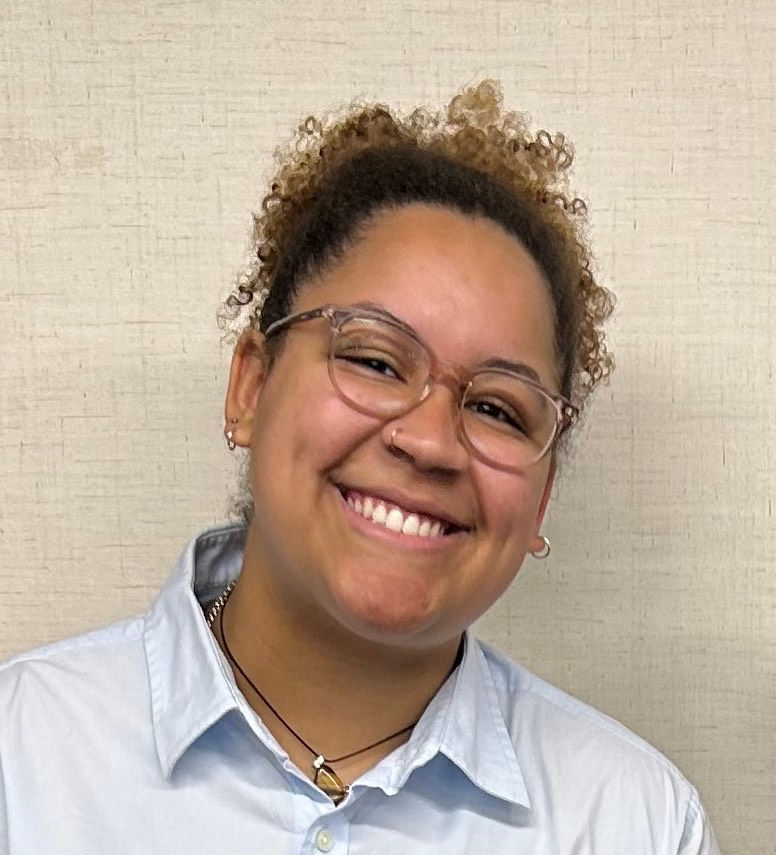
MNJRC team members with ONS/PEACE staff Faith Lofton and Rachel Holzemer
As the Research Director of the MNJRC, I have the privilege of working with incredible research teams on powerful projects that touch all aspects of our criminal legal system. We research promising practices across topics from community safety to policing, courts, prisons, reentry, and all the collateral consequences that come with system involvement.
The outcomes of our research are not simply academic exercises but embodied experiences for those who shape and drive the research, especially for those who ultimately stand to grow and gain from our shared learnings. I know this to be true because I experience it. But it hits different when I get the chance to reflect with a partner and hear their honest take on what it’s like - and why it matters - to partner with the MNJRC for a research project.
Working with the City of Saint Paul and the folks at ONS has been a joy; I often point to this partnership as an example of what's possible when doing participatory research and developmental evaluations. When people working in government, community-based organizations, and research can align on shared goals and a commitment to learning and accountability in our practices and efforts to shape real change, we can work to build safer communities.
The team at ONS recently shared an internal reflective conversation with me about our work together to evaluate Project PEACE - the City of Saint Paul’s powerful approach to addressing gun violence. (Head to our website for more on the project here.)
Below are reflections from an interview with ONS Deputy Director Rachel Holzemer and Project PEACE Program Manager Faith Lofton, conducted by a team member at ONS.
What was it like for you to work with MNJRC?

RACHEL. We were just building out Project PEACE, and we wanted to make sure we were doing it in a way that achieved the outcomes in the community that we intended—not just to reduce gun violence, but to support community stability. We wanted to ensure we were building things out appropriately, and to know if we were not hitting the mark.
It was a very strange time in our development—we didn’t have any staff outside of Faith and Brooke! But we knew we were on the cusp of having staff, and there were infrastructural pieces that we needed to build out. We wanted a developmental evaluation that would let us make adjustments to improve the program as we were building it.
During the study, we were living in lockstep with our evaluators. It was them, with us, in partnership, in a way that evaluation doesn’t provide for. MNJRC took that approach because of the type of evaluation they knew we would need, based on where we were in our development.

FAITH. For me, working with the evaluators was reassuring: they let us know that we were doing some very innovative work, and helped us understand how to tell the story of what we were doing to other people. They helped us to explain the impact we were having on people’s lives.
I felt really heard and seen. For someone to ask strategic, thought-provoking questions around our work, for them to understand what a day in our life was like—we felt very heard.
When we got to the point of having additional staff, the evaluation got their unique perspective as well. It’s one thing for me and Brooke to be on the ground doing the work. But for the evaluators to hear directly from the new staff, the people who are working intensively with families—it gave a more comprehensive understanding of the work to hear directly from the people who are doing it every day.
It was nice to see the evolution of things reflected in the evaluation.
The evaluators made the process as smooth as one could. They were very flexible with schedules! They had no choice but to be; we were constantly on the go, so it was very helpful that they could reschedule and reschedule again.
And they helped us have some very frank conversations. Remember, Rachel, when Kayla came in to help us talk about what it was like for the Director to be involved in certain things?
RACHEL. To that point, Faith—they’re more than just a research and evaluation shop; they hold the expertise that helped us work through the programmatic challenges we were having.
They could say, “We know this is a pressure point for you,” and come in and facilitate conversations so we could make decisions to resolve it. It was more than an evaluation: they were thought partners in a lot of this. They didn’t hold the information they were learning; they were very open.
That’s the beauty of developmental evaluation, that information exchange. They were very intentional about sharing preliminary findings with us at every phase of the work. “Here’s something community has said, and you should know this right now!” “Here’s a pressure point for you.”
Some evaluations can feel punitive; none of this was. We had that conversation at the start when we were formulating our research questions. They were there as a partner in making sure that Project PEACE was successful, identifying the weak points in the moment, so we could address them, instead of holding them to the end.
What was the report’s most surprising finding, for you?
RACHEL. What stands out to me, Faith, is the finding about life coaching being mutually beneficial. There’s a quote about it in which some of the life coaches have said, they feel that they get just as much benefit out of supporting people and families, because it’s given them a level of autonomy they haven’t felt in government. Project PEACE gives them the freedom to make movement for people, to make government systems work for people instead of against them. That was really surprising to me. Katie told us, “This isn’t something that’s been found in other research.” They were able to learn that because of their proximity to the work, side-by-side with the life coaches.
FAITH. I was really intrigued by the finding that the life coaches were the most vulnerable but—what did the report say exactly?
RACHEL. “Life coaches are the heart of Project PEACE—the most valuable asset and potentially the most vulnerable one.”
FAITH. Yes! That was extremely intriguing. The vulnerability piece was surprising to me. I know the importance of the work; I’ve done it myself for many years. But to have it written out that way- that this work is vulnerable and valuable- brings a heightened sense of the importance of the work. I am a very humble person, so to be considered “the heart of Project PEACE” — to have that written out- it’s like, “Wow! That’s absolutely correct.”

Learn more about working with MNJRC at mnjrc.org/our-work.
Interested in partnering with us for a research project or hiring us for an evaluation? Reach out to katie@mnjrc.org.


Comments